
![[object Object] icon](/_next/static/media/home.59b745c9.svg)

![[object Object] icon](/_next/static/media/buy.57cae078.svg)
![[object Object] icon](/_next/static/media/rent.2864d22a.svg)
![[object Object] icon](/_next/static/media/commercial.5f5f9bbc.svg)
![[object Object] icon](/_next/static/media/condos.8a55189e.svg)
![[object Object] icon](/_next/static/media/newLaunches.e1f1ccfd.svg)
![[object Object] icon](/_next/static/media/agents.9f8252e2.svg)
![[object Object] icon](/_next/static/media/guides.f567fc08.svg)
![[object Object] icon](/_next/static/media/contactUs.a39ef3b7.svg)
![[object Object] icon](/_next/static/media/aboutUs.e47cbd6d.svg)
)

Legal Requirements for Property Ownership: A Complete Guide to Malaysia’s Property Laws in 2026
Key Takeaways
- Clear Legal Framework: Malaysia has structured laws governing ownership, transfers, and land titles.
- Ownership Types Matter: Freehold, leasehold, and strata ownership each come with different rights.
- Foreign Ownership Rules: International buyers must meet specific conditions and approvals.
- Legal Documents Are Essential: Proper handling of agreements ensures secure transactions.
- Due Diligence Is Critical: Understanding land titles and restrictions prevents future legal issues.
Understanding the Legal Framework of Property Ownership in Malaysia
Property ownership is one of the biggest financial steps a person can take. Before buying a home or investing in real estate, it is essential to understand the legal requirements for property ownership in Malaysia, where rules are detailed and structured1.
At the core of Malaysia’s property system is a well-defined legal framework that regulates how property is owned, transferred, and protected. These laws outline ownership rights, land title classifications, and transfer procedures, ensuring that transactions remain secure and transparent2.
Types of Property Ownership
- Freehold ownership: The buyer owns the property permanently.
- Leasehold ownership: The property is owned for a fixed period, often up to 99 years.
- Strata ownership: Common in apartments and condos, where you own your unit and share common areas.
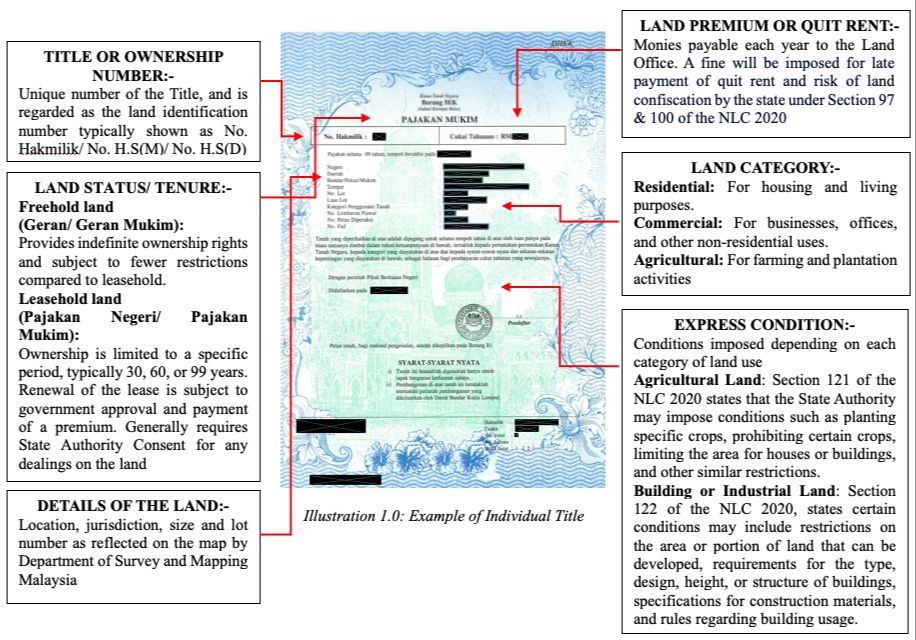
How to Read a Malaysian Land Title
A land title is one of the most important legal documents in any property transaction. It confirms ownership and outlines the rights and conditions attached to a property.
)
Key components of Malaysian land ownership records including ownership details, land classification, and legal conditions
Land titles typically include essential details such as the owner’s name, land size, ownership type, and any restrictions or conditions. Misunderstanding these elements can lead to legal complications, especially when there are limitations on usage or transfer3.
Real Estate Laws and Government Regulation
Malaysia’s property market is regulated through a combination of national laws and local authorities to ensure fair and lawful transactions. Key legislation and governing bodies oversee land ownership, planning approvals, and compliance requirements4.
Globally, Malaysia is recognized as a structured and reliable property market, aligning with international standards that enhance investor confidence and transparency5.
Legal Requirements for Foreign Property Ownership
Foreign buyers are allowed to purchase property in Malaysia, but they must follow specific legal conditions. These include minimum price thresholds, obtaining state approvals, and restrictions on certain types of properties6.
The MM2H Program
The Malaysia My Second Home (MM2H) program allows foreigners to stay long-term while investing in property. It offers benefits such as extended residency, property purchase opportunities, and lifestyle advantages for international investors7.
Malaysia in the Global Property Market
Malaysia continues to attract global attention due to its affordability and structured legal environment. Cross-border property investments are increasing across Asia-Pacific, with Malaysia standing out for its accessibility and clear regulations8.
Its affordability and legal clarity also make it appealing to international buyers looking for stable investment destinations9.
The Role of Legal Documents in Property Transactions
Property transactions involve several legal documents that protect both buyers and sellers. These include agreements, transfer forms, and financial documentation that must be handled correctly to avoid delays or disputes10.
Property Inheritance and Wills in Malaysia
Planning for the future is a key part of property ownership. Property can be transferred through wills, trusts, or legal inheritance processes, ensuring that assets are distributed according to the owner’s wishes11.
Transparency and Beneficial Ownership
Global efforts to improve transparency in property ownership have influenced Malaysia’s regulations. Identifying the true owners behind transactions helps reduce fraud, prevent money laundering, and build trust in the market12.
Protecting Cultural and Legal Integrity
Property ownership also connects to broader legal and cultural responsibilities. International cooperation helps prevent illegal transfers, particularly in cases involving culturally significant assets13.
Key Steps to Buying Property in Malaysia
- Search for property
- Check land title and legal status
- Sign the Sale and Purchase Agreement
- Apply for financing
- Obtain state approval (if required)
- Complete transfer and payment
Common Mistakes to Avoid
- Not checking land title restrictions
- Ignoring state-specific regulations
- Skipping legal advice
- Misunderstanding foreign ownership rules
Why Legal Knowledge Matters More Than Ever in 2026
With increasing global investment and cross-border transactions, understanding legal requirements is more important than ever. Buyers who are informed about Malaysia’s property laws are better positioned to make secure and profitable decisions.
Final Thoughts
Property ownership in Malaysia offers strong opportunities supported by a stable and transparent legal system. However, success depends on understanding every aspect of the process, from land titles to ownership regulations.
By gaining the right knowledge and seeking proper guidance, buyers can confidently navigate Malaysia’s property market and make well-informed investment decisions in 2026 and beyond.
Frequently Asked Questions
Question: What are the main types of property ownership in Malaysia?
Answer: The main types are freehold, leasehold, and strata ownership, each with different rights and durations.
Question: Can foreigners buy property in Malaysia?
Answer: Yes, foreigners can purchase property but must meet minimum price requirements, obtain approvals, and follow state regulations.
Question: Why is checking a land title important?
Answer: A land title confirms ownership and outlines any restrictions, helping buyers avoid legal issues or unexpected limitations.
Disclaimer: The information is provided for general information only. JYMS Properties makes no representations or warranties in relation to the information, including but not limited to any representation or warranty as to the fitness for any particular purpose of the information to the fullest extent permitted by law. While every effort has been made to ensure that the information provided in this article is accurate, reliable, and complete as of the time of writing, the information provided in this article should not be relied upon to make any financial, investment, real estate or legal decisions. Additionally, the information should not substitute advice from a trained professional who can take into account your personal facts and circumstances, and we accept no liability if you use the information to form decisions.