
![[object Object] icon](/_next/static/media/home.59b745c9.svg)

![[object Object] icon](/_next/static/media/buy.57cae078.svg)
![[object Object] icon](/_next/static/media/rent.2864d22a.svg)
![[object Object] icon](/_next/static/media/commercial.5f5f9bbc.svg)
![[object Object] icon](/_next/static/media/condos.8a55189e.svg)
![[object Object] icon](/_next/static/media/newLaunches.e1f1ccfd.svg)
![[object Object] icon](/_next/static/media/agents.9f8252e2.svg)
![[object Object] icon](/_next/static/media/guides.f567fc08.svg)
![[object Object] icon](/_next/static/media/contactUs.a39ef3b7.svg)
![[object Object] icon](/_next/static/media/aboutUs.e47cbd6d.svg)
)

Buying Property in Malaysia by Foreigners: What You Need to Know in 2026
Key Takeaways
- Foreign Ownership Allowed: Foreigners can legally purchase property in Malaysia but must follow state-specific rules.
- Minimum Price Rules: Each state sets a minimum purchase threshold that determines eligibility.
- Location Matters: Kuala Lumpur and Johor Bahru offer different investment opportunities and risks.
- Financing Challenges: Loans are available but often come with stricter requirements for foreigners.
- Additional Costs: Buyers must account for stamp duty, legal fees, and maintenance costs.
Introduction to Buying Property in Malaysia
Buying property in Malaysia by foreigners is quickly becoming one of the most talked-about real estate topics in 2026. With its mix of modern cities, affordable housing, and expat-friendly policies, Malaysia is drawing attention from global investors, retirees, and digital professionals alike.
But while the market is open, it isn’t simple. Rules change by state, prices have minimum limits, and financing can be tricky. A clear understanding is essential before making any decision, especially as policies continue to evolve1.
Can Foreigners Buy Property in Malaysia?
Yes, foreigners can legally buy property in Malaysia, but it comes with conditions. The system is designed to allow foreign investment while protecting local buyers through pricing thresholds and restrictions on certain property types2.
Foreign buyers are typically allowed to purchase high-rise residential units such as condominiums and serviced apartments, provided they meet the minimum price requirements set by each state. However, they are restricted from buying low-cost housing, Malay Reserved Land, and certain strategic properties.
Approval from state authorities is often required, and the legal framework can vary significantly depending on the location, making professional guidance essential3.
The Big Rule: Minimum Property Price Thresholds
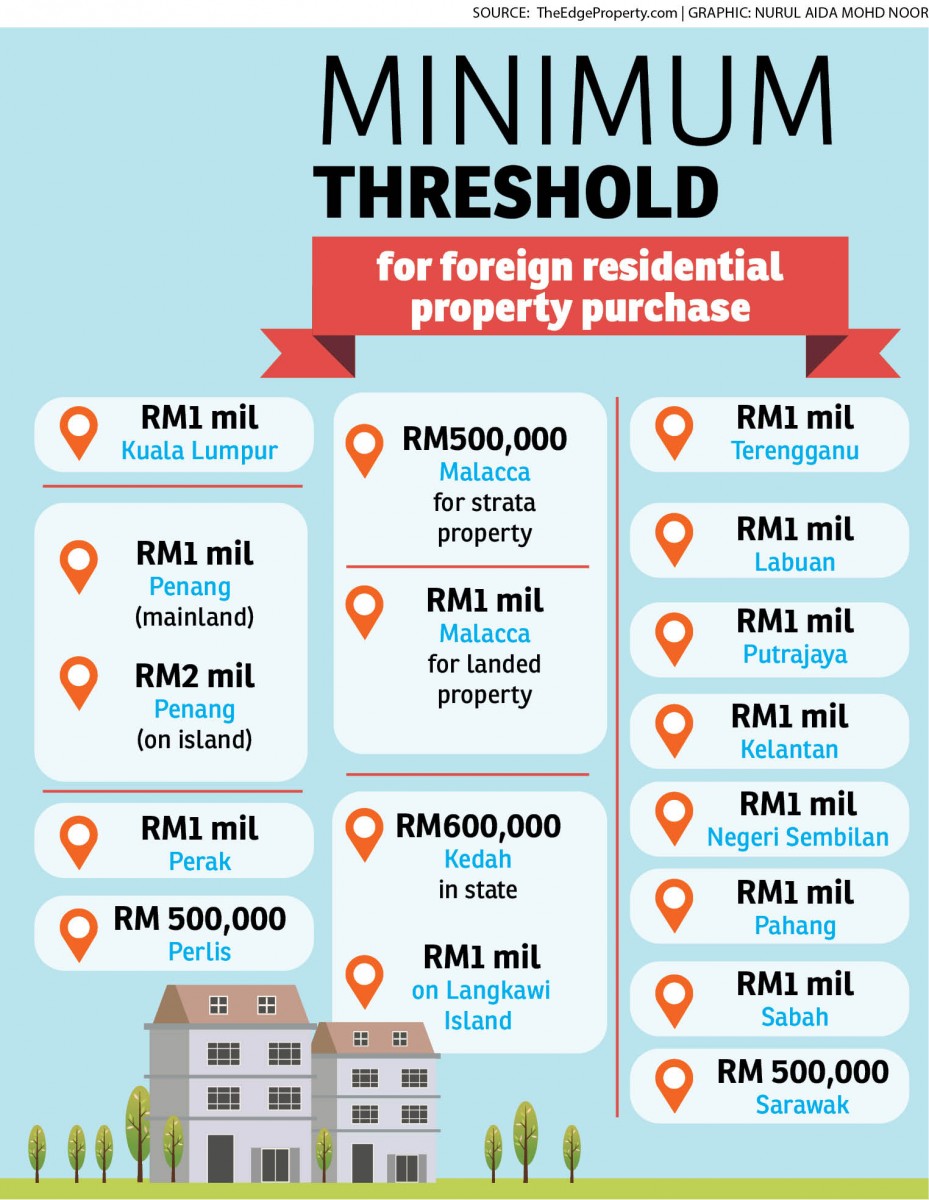
One of the most important aspects of buying property in Malaysia by foreigners is the minimum price threshold. Each state sets its own minimum purchase value, which directly impacts what types of properties are accessible to foreign buyers.
)
Minimum property price thresholds across Malaysian states highlighting regional differences in foreign ownership requirements
These thresholds vary widely across regions such as Kuala Lumpur, Johor, and Penang, reflecting localized strategies to balance foreign investment with housing affordability for residents4.
Understanding these limits is critical because they determine not only affordability but also investment potential across different regions5.
Best Places to Buy: Kuala Lumpur vs Johor Bahru
Kuala Lumpur and Johor Bahru are two of the most popular destinations for foreign property buyers, each offering unique advantages depending on investment goals.
Kuala Lumpur, as the capital city, provides stable long-term investment opportunities with strong rental demand from professionals and expatriates. In contrast, Johor Bahru benefits from its proximity to Singapore, attracting cross-border workers and offering potential for higher growth, albeit with more volatility6.
Step-by-Step: How Foreigners Buy Property in Malaysia
The property buying process in Malaysia is structured and involves several key steps, from property selection to final ownership transfer. Legal oversight and state approvals are central to the process and can influence the overall timeline7.
- Property search
- Engage a lawyer
- Sign the Sale and Purchase Agreement (SPA)
- Pay deposit
- Obtain state authority approval
- Secure financing (if needed)
- Complete payment and transfer ownership
Financing: Can Foreigners Get a Mortgage?
Foreigners can apply for home loans in Malaysia, but approval is subject to stricter conditions. Banks typically require higher down payments and apply more conservative loan-to-value ratios compared to local buyers.
Programs like MM2H may improve access to financing, as they provide a form of long-term residency that increases buyer credibility with financial institutions8.
Costs You Should Expect
Beyond the property price, buyers must account for additional costs such as stamp duty, legal fees, and maintenance charges. These can significantly increase the total investment required.
Recent updates also indicate higher stamp duties for foreign buyers, reflecting efforts to balance foreign investment with local housing affordability9.
Legal Trends Shaping the Market in 2026
Malaysia’s property regulations continue to evolve, with updates focusing on stricter compliance, revised thresholds, and updated tax structures. These changes aim to maintain a balanced and sustainable property market10.
Real Experiences: What Foreign Buyers Say
Real-world experiences highlight common challenges such as navigating state-specific rules, delays in approvals, and financing difficulties. Many buyers emphasize the importance of preparation and professional assistance11.
Practical hurdles also include opening local bank accounts, transferring funds, and managing documentation, all of which require careful planning12.
The Role of MM2H (Malaysia My Second Home)
The MM2H program plays a significant role in supporting foreign property ownership by offering long-term residency and improving access to local services, including banking and financing options.
It provides a pathway for foreigners to live, invest, and integrate more easily into Malaysia’s property market13.
Expert Insights and Market Outlook
Malaysia remains one of the most accessible property markets in Southeast Asia for foreign buyers, offering competitive pricing, strong infrastructure, and no blanket ban on ownership14.
With ongoing policy refinements and growing investor interest, 2026 is expected to be a pivotal year for the market, with opportunities balanced by the need for careful planning15.
Common Mistakes to Avoid
- Ignoring State Rules: Regulations vary significantly across different regions.
- Underestimating Costs: Additional fees can add a substantial amount to the total price.
- Skipping Legal Help: Professional guidance is crucial for compliance and due diligence.
- Assuming Easy Financing: Loan approvals for foreigners are not guaranteed.
- Overlooking Currency Risks: Exchange rate fluctuations can impact total investment.
Final Thoughts: Is It Worth It?
Buying property in Malaysia as a foreigner offers real opportunities, but it requires careful planning and a clear understanding of the rules.
With the right approach, Malaysia remains an attractive and accessible market, but success depends on preparation, awareness, and making informed decisions.
Frequently Asked Questions
Question: Can foreigners buy landed property in Malaysia?
Answer: In most cases, foreigners are restricted from buying landed properties unless special approval is granted by state authorities.
Question: What is the minimum price foreigners must pay?
Answer: The minimum price varies by state, typically starting from RM500,000 to RM1 million depending on the location.
Question: Is Malaysia a good place for property investment?
Answer: Yes, Malaysia offers relatively affordable prices, strong infrastructure, and an open market, making it attractive for foreign investors.
Disclaimer: The information is provided for general information only. JYMS Properties makes no representations or warranties in relation to the information, including but not limited to any representation or warranty as to the fitness for any particular purpose of the information to the fullest extent permitted by law. While every effort has been made to ensure that the information provided in this article is accurate, reliable, and complete as of the time of writing, the information provided in this article should not be relied upon to make any financial, investment, real estate or legal decisions. Additionally, the information should not substitute advice from a trained professional who can take into account your personal facts and circumstances, and we accept no liability if you use the information to form decisions.