

![[object Object] icon](/_next/static/media/home.59b745c9.svg)

![[object Object] icon](/_next/static/media/buy.57cae078.svg)
![[object Object] icon](/_next/static/media/rent.2864d22a.svg)
![[object Object] icon](/_next/static/media/commercial.5f5f9bbc.svg)
![[object Object] icon](/_next/static/media/condos.8a55189e.svg)
![[object Object] icon](/_next/static/media/newLaunches.e1f1ccfd.svg)
![[object Object] icon](/_next/static/media/agents.9f8252e2.svg)
![[object Object] icon](/_next/static/media/guides.f567fc08.svg)
![[object Object] icon](/_next/static/media/contactUs.a39ef3b7.svg)
![[object Object] icon](/_next/static/media/aboutUs.e47cbd6d.svg)


The Expanding Role of AI and AI Agents Across Industries
Key Takeaways
- AI's Pervasive Impact: Artificial Intelligence and AI agents are transforming diverse sectors, from construction and content creation to customer service and healthcare, driving efficiency and innovation.
- Enhanced Capabilities: AI helps optimize complex processes like building design and project management, automates content generation, streamlines customer support, and offers analytical power for critical research.
- Future Readiness: Adapting to an AI-powered future requires continuous learning and the development of new skills, as AI reshapes career paths and personal growth across industries.
Artificial Intelligence (AI) isn't just a buzzword anymore; it's a powerful force reshaping our world, touching everything from how we build our cities to how we care for our loved ones. This week, we're diving deep into the expanding role of AI and AI agents across industries, exploring how these smart systems are solving problems, creating new opportunities, and even helping us understand our world better. Get ready to discover how AI is making big waves in places you might not expect!
From complex data handling to revolutionizing content creation, AI is proving to be an indispensable tool. It’s not just about robots from science fiction; it’s about smart software and systems that learn and adapt, making our lives easier and more efficient. Let’s explore some of the most exciting developments.
AI in the Construction Zone: Building Smarter Futures
When you think of AI, construction sites might not be the first thing that comes to mind. But guess what? Artificial intelligence is stepping onto the building site and shaking things up! A recent review highlights the significant role of AI in the construction industry: A review of present1. Imagine AI helping to design buildings, manage projects, and even spot potential problems before they become big headaches. This means safer worksites, faster projects, and less waste. AI can analyze vast amounts of data to predict delays, optimize material usage, and even guide robotic equipment with precision. This isn't just about making construction faster; it's about making it smarter, more sustainable, and ultimately, more reliable for everyone who uses the spaces we build. The integration of AI in construction reflects a broader trend of innovation seen across various sectors, including the home improvement market2, where new technologies are constantly reshaping consumer expectations and industry practices.
The ability of AI to process and understand complex information is transforming traditional practices. From initial planning stages, where AI can simulate various designs and materials to assess their efficiency and cost-effectiveness, to the on-site execution, where drones powered by AI can monitor progress and identify deviations from the plan, the benefits are immense. It helps managers make quicker, data-driven decisions, reducing risks and improving overall project outcomes. This powerful integration of AI means that our future infrastructure will not only be built with human ingenuity but also enhanced by the analytical prowess of intelligent machines.
AI Agents: The New Architects of Content
In today's fast-paced digital world, content is king. And guess who's helping to wear the crown? AI agents! These clever programs are becoming incredibly skilled at generating content, from articles like this one to marketing materials and social media posts. They're designed to understand what we need and then create it, often in various styles and formats.
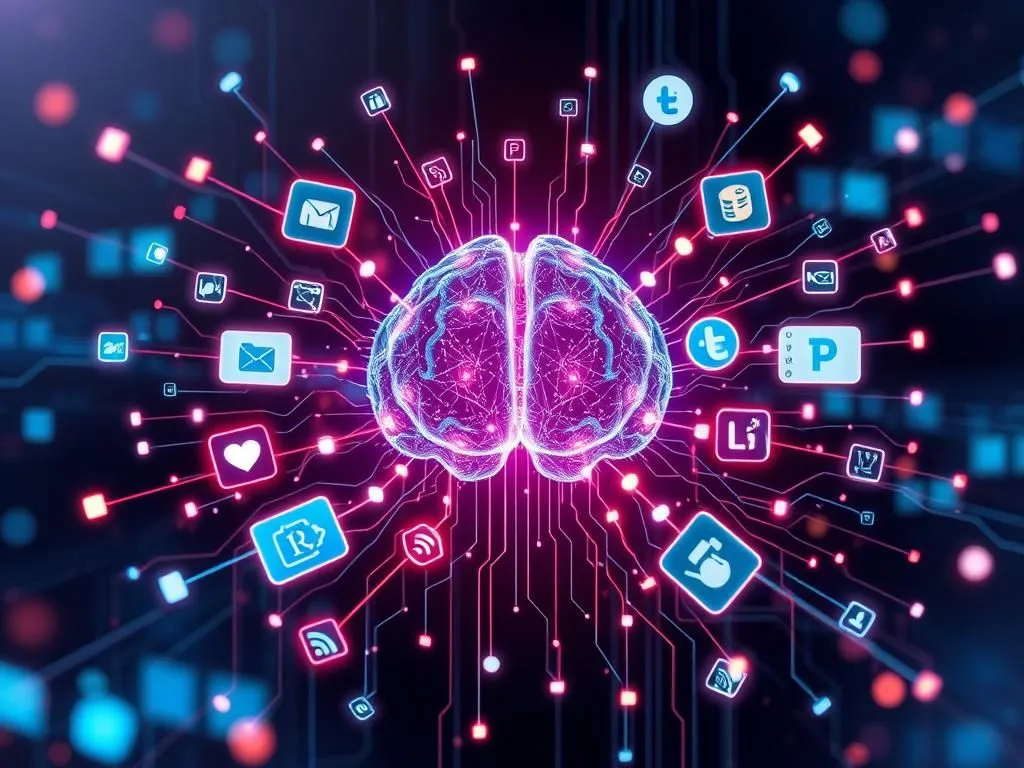
AI agents are intelligent programs revolutionizing content creation, enabling businesses to produce high-quality and diverse digital materials like articles, marketing assets, and social media posts with greater efficiency. These systems streamline the creative process, empowering human creators to focus on strategic direction while ensuring more engaging and informative online experiences.
The image above gives us a peek into the capabilities and key components of AI agents for content generation, showing how they are set to improve many aspects of life. These agents can help businesses produce high-quality, relevant content faster than ever before. Think about how much time and effort goes into writing, editing, and optimizing content for different platforms. AI agents can streamline this process, freeing up human creators to focus on strategy and creativity. This means more engaging websites, more informative articles, and a richer online experience for all of us.
But how do these AI agents get so smart? A big part of it involves understanding how to use information effectively. This is where the complexities of data indexing for RAG (Retrieval-Augmented Generation) pipelines come into play. RAG pipelines allow AI models to access and use up-to-date information from a vast knowledge base, making their generated content more accurate and relevant. It’s like giving an AI agent a super-smart library card and showing it how to find exactly the right book for any question! This ability to intelligently retrieve information and then use it to generate new content is a game-changer for many industries, ensuring that the content produced is not only creative but also factual and informed. The drive for better content and more efficient processes mirrors trends in other markets, such as the increasing focus on DIY and accessible home improvement solutions3.
AI in Customer Service: Your Next Friendly Voice
Ever called customer service and wished for a quicker, more helpful response? AI is making that a reality in call centers! Building a call center with AI assistance is becoming more common, and it’s transforming how companies help their customers. The summary of AI-Powered Call Center Knowledge Base: Benefits and Top 7 Tools4 shows just how much potential AI has in this area.
These AI systems can understand your questions, guide you through solutions, and even help human agents find the information they need super fast. This means less time waiting on hold, more accurate answers, and a much smoother experience when you need help. AI-powered knowledge bases allow customers to find answers to common questions themselves, and when a human agent is needed, the AI can quickly provide the agent with all the relevant information about your query. This collaboration between AI and human agents creates a powerful, efficient, and user-friendly customer service experience. It's about getting you the help you need, exactly when you need it, with a friendly and knowledgeable touch.
The benefits extend beyond just speed. AI can analyze customer interactions to identify common problems, predict future needs, and even suggest improvements to products or services. This data-driven approach helps companies not only resolve issues but also prevent them from happening in the first place, leading to happier customers and more successful businesses. Imagine an AI learning from every conversation, constantly improving its ability to assist, and making every customer interaction a positive one.
AI in Healthcare: Caring for Our Vulnerable
AI's reach also extends to some of the most sensitive and important areas of our society, like healthcare. While the research points to critical human challenges, we can see how AI's analytical power *could* offer solutions. For example, Mobility among older adults presents unique Challenges and opportunity in mobility among older adults–key5. AI could analyze gait patterns to predict fall risks, develop personalized exercise plans, or even power smart assistive devices that help older adults maintain independence and well-being. By processing data from wearable sensors or smart home environments, AI could provide early warnings or help monitor progress, offering invaluable support.
Furthermore, specific health conditions like Dementia - Alzheimer's6 require specialized care and ongoing research. While the research highlights the need for human medical advancements, AI holds promise in accelerating these efforts. AI could help researchers analyze vast datasets of medical images, genetic information, and patient histories to identify patterns, diagnose conditions earlier, or even discover new treatment pathways for diseases like Alzheimer's. Imagine AI sifting through millions of research papers and clinical trials in minutes, helping scientists find crucial connections that might otherwise take years. This could lead to breakthroughs that improve the lives of countless individuals and their families.
In the sensitive area of healthcare, ethical considerations are paramount. This extends to how products and services are advertised. Healthcare and medicines - Advertising Policies Help7 emphasizes the importance of ethical advertising, especially when dealing with sensitive health products. Google's general Google Ads policies - Advertising Policies Help8 provide a broad framework, and AI can play a role here too. AI can be used to monitor advertising content to ensure it complies with ethical guidelines and avoids misleading claims, helping to protect consumers in vulnerable situations. This ensures that while we leverage AI's power, we also uphold the highest standards of integrity and responsibility.
Understanding Our World Better: The Analytical Power of AI
The world is a complex place, and understanding its various facets requires careful study and analysis. AI, with its ability to process and interpret vast amounts of data, is becoming an invaluable tool in research and social understanding.
For instance, grasping Key Migration Terms, Migration Glossary | IOM, UN Migration9 is vital in our globalized world. AI can help analyze migration patterns, predict future trends, and even assist in humanitarian efforts by optimizing resource allocation based on data. By processing news articles, social media, and official reports, AI can help researchers and policymakers gain a deeper, real-time understanding of global migration dynamics, leading to more informed and compassionate responses.
In academic research, precise methodologies are crucial. Secondary Qualitative Research Methodology Using Online Data10 and What is summative content analysis in qualitative research? — Delve11 describe important methods for analyzing information. AI can greatly assist in these qualitative research processes. While human insight remains irreplaceable in interpreting nuanced qualitative data, AI tools can help researchers by automatically categorizing and summarizing large volumes of text, identifying themes, and even flagging contradictory information. This speeds up the analytical process, allowing human researchers to focus on the deeper interpretations and theoretical development.
AI can also help maintain academic and professional integrity. Various guides, such as Angewandte Chemie International Edition - Notice to Authors - Wiley12, provide essential guidance on research and publishing standards. AI-powered tools can assist authors in ensuring their work meets these rigorous standards by checking for plagiarism, grammatical errors, and even structural consistency, helping to uphold the quality and trustworthiness of published research.
Preparing for an AI-Powered Future: Career Paths and Personal Growth
The rapid expansion of AI also has a significant impact on education and career paths. Aspiring Computer Science students, for example, are entering a world where AI skills are highly sought after. While the provided research includes a link to This is My resume..I am Computer Science student graduating in13, it implicitly suggests the importance of presenting oneself effectively in a competitive, tech-driven job market. AI itself can play a role in this. AI-powered tools can help students optimize their resumes, suggest relevant skills to highlight, and even prepare for interviews by simulating common questions and providing feedback. This means that even as AI changes the job landscape, it also provides tools to help us navigate it successfully.
The ability to adapt and learn new skills, especially in areas related to AI, will be crucial for the next generation of professionals. Whether it's understanding how to work alongside AI agents, developing new AI technologies, or applying AI insights to traditional fields like healthcare or construction, the future workforce will need a strong grasp of intelligent systems. This evolving landscape underscores the importance of continuous learning and staying curious about how AI can be leveraged for positive impact. This emphasis on continuous learning and adapting to new technologies is a common theme across different sectors, influencing even the way individuals approach home improvement and DIY projects.
Conclusion: The AI Revolution Continues
From the groundbreaking world of construction to the delicate art of content creation, and from the crucial support in healthcare to the complex task of understanding global migration, the expanding role of AI and AI agents across industries is undeniable. AI is not just a tool; it's a partner, an assistant, and a powerful analytical engine that is helping us solve some of the world's most pressing challenges.
As AI agents become more sophisticated and widely adopted, they promise to unlock unprecedented levels of efficiency, innovation, and understanding. However, as with any powerful technology, careful consideration of ethical implications and responsible deployment will be key. By integrating AI thoughtfully, we can build smarter cities, offer better care for our elders, provide quicker customer service, and create more engaging content, all while fostering a deeper understanding of our intricate world. The AI revolution is not just happening; it's empowering us to shape a more intelligent, efficient, and interconnected future for everyone. Stay curious, because the possibilities are just beginning!
Frequently Asked Questions
Question: What are AI agents?
Answer: AI agents are intelligent computer programs designed to perceive their environment, make decisions, and take actions to achieve specific goals, often involving complex tasks like content generation or customer service interaction.
Question: How is AI impacting the construction industry?
Answer: In construction, AI is used for tasks such as optimizing designs, managing projects, predicting potential issues, and guiding robotic equipment, leading to safer, faster, and more sustainable building practices.
Question: Can AI improve customer service without replacing human interaction?
Answer: Yes, AI in customer service often works by assisting human agents, providing quick access to information, and handling routine inquiries, allowing human agents to focus on more complex issues and provide more personalized support.
Disclaimer: The information is provided for general information only. JYMS Properties makes no representations or warranties in relation to the information, including but not limited to any representation or warranty as to the fitness for any particular purpose of the information to the fullest extent permitted by law. While every effort has been made to ensure that the information provided in this article is accurate, reliable, and complete as of the time of writing, the information provided in this article should not be relied upon to make any financial, investment, real estate or legal decisions. Additionally, the information should not substitute advice from a trained professional who can take into account your personal facts and circumstances, and we accept no liability if you use the information to form decisions.