

![[object Object] icon](/_next/static/media/home.59b745c9.svg)

![[object Object] icon](/_next/static/media/buy.57cae078.svg)
![[object Object] icon](/_next/static/media/rent.2864d22a.svg)
![[object Object] icon](/_next/static/media/commercial.5f5f9bbc.svg)
![[object Object] icon](/_next/static/media/condos.8a55189e.svg)
![[object Object] icon](/_next/static/media/newLaunches.e1f1ccfd.svg)
![[object Object] icon](/_next/static/media/agents.9f8252e2.svg)
![[object Object] icon](/_next/static/media/guides.f567fc08.svg)
![[object Object] icon](/_next/static/media/contactUs.a39ef3b7.svg)
![[object Object] icon](/_next/static/media/aboutUs.e47cbd6d.svg)


International Law: How Malaysia Shapes and is Shaped by Global Rules
Key Takeaways
- Global Participation: Malaysia plays a significant and active role in international law, contributing to and being influenced by global rules.
- Broad Engagement: The nation's involvement spans various areas, including challenging sanctions, managing shared resources, addressing environmental concerns, and evolving human rights policies.
- Commitment to Future: Malaysia is dedicated to cultivating future legal experts through education and practical experience to address complex global legal challenges.
Welcome to International Law
Welcome, curious minds, to the fascinating world of International Law! Imagine a giant rulebook that helps countries talk to each other, trade, protect the environment, and even solve big problems. This isn't just about what happens inside one country's borders; it's about how nations act as good neighbours on our planet. And guess what? Malaysia, our vibrant Southeast Asian nation, plays a super important role in this global game!
From ancient times, humans have made agreements. As our world grew smaller, with people travelling and trading more, countries realised they needed shared rules to keep things fair and peaceful. That's where International Law comes in. It's not always simple, and sometimes countries don't agree, but it's a powerful tool for building a better world. Malaysia has a rich history of engaging with these global rules, showing how a country can stand up for its beliefs while also working with others.
Our journey today will uncover how Malaysia steps onto the global stage, from its bold statements on world issues to how its own judges look at international rules. We'll explore exciting cases, important agreements, and even how young legal minds in Malaysia are preparing to tackle the challenges of tomorrow's global landscape. So, buckle up, because understanding International Law is key to understanding our world!
What is International Law, and Why Does it Matter to Malaysia?
At its heart, International Law is a set of rules and agreements that countries accept to guide their behaviour towards one another. Think of it like the rules you have in school or at home, but on a much bigger, global scale! These rules help keep things orderly between nations, preventing fights and encouraging cooperation.
For a country like Malaysia, being part of this international system is incredibly important. Malaysia interacts with other countries every single day – whether it's trading goods, welcoming tourists, or working together on big problems like climate change. Without a common set of rules, these interactions would be much harder, and potentially very messy!
Malaysia has often been a strong voice on the global stage, showing that even smaller nations can have a big impact on International Law. A clear example of this is Malaysia's stance on international sanctions. In a bold move, the Malaysian Prime Minister once stated that U.S. sanctions on Iran violated international law. This shows Malaysia's commitment to speaking out when it believes global rules are not being followed fairly. This principle of upholding justice and fairness in global dealings is a cornerstone of Malaysia’s foreign policy, demonstrating its active participation in shaping international legal discourse.
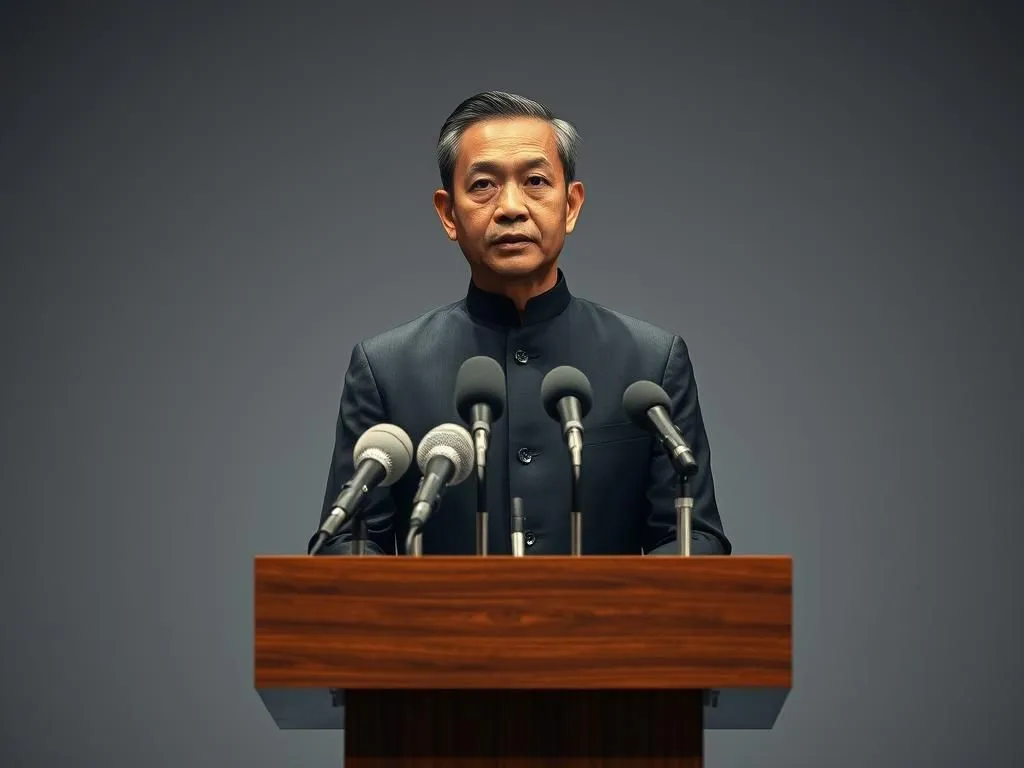
Malaysia often acts as a strong voice on the global stage, particularly concerning international sanctions. The nation believes in upholding justice and fairness in global dealings, actively participating in international legal discourse.
This position isn't just talk; it reflects Malaysia's deep understanding that international laws are designed to protect all nations, big or small. By challenging actions it sees as unfair or against established global norms, Malaysia champions the very spirit of International Law itself – that rules should apply to everyone and be followed consistently for the good of the global community.
Navigating Global Rules: Sanctions and Sovereignty
Let's dive a bit deeper into Malaysia's position on international sanctions. Sanctions are like strong warnings or punishments that one or more countries place on another country. They can stop trade, restrict travel, or block financial transactions. The idea is often to make a country change its behaviour, perhaps regarding human rights or nuclear weapons.
However, Malaysia, like many other nations, views these actions through the lens of International Law. The concern often arises when sanctions are imposed by one country without the full backing of international bodies like the United Nations, or when they disproportionately harm innocent people. Malaysia has consistently argued for a multilateral approach, meaning decisions should be made by many countries working together, rather than just one powerful nation dictating terms.
The Prime Minister's statement regarding U.S. sanctions on Iran, as mentioned earlier, perfectly illustrates this point. Malaysia believes that such unilateral actions can sometimes go against the principles of sovereignty (a country's right to govern itself without outside interference) and non-interference in other countries' affairs, which are fundamental tenets of International Law. When Malaysia raises concerns about sanctions, it's essentially asking the world to consider whether these actions align with the agreed-upon global rulebook. It's a tricky balance: how do countries address serious global problems without overstepping their bounds or harming innocent populations? Malaysia's role is often to advocate for solutions that are fair, lawful, and respect the rights of all nations, showing its dedication to a just and equitable international legal order.
Real-World Cases: International Law in Action
Sometimes, the world faces events so unusual and complex that they test the very boundaries of International Law. These real-world cases become important lessons in how global rules are applied, interpreted, and sometimes even challenged. Malaysia has found itself at the centre of such intricate situations, forcing its legal experts and government officials to navigate uncharted waters.
One particularly compelling example is The Case of Kim Jong-nam and Questions of International Law. This high-profile incident, involving the assassination of the estranged half-brother of North Korea's leader in Kuala Lumpur International Airport, raised a whole host of complicated legal questions. Was it an act of state-sponsored terrorism? What jurisdiction did Malaysia have over foreign nationals suspected of such a crime? How would diplomatic immunity apply? Who was responsible for the victim's body?
The Yale Journal of International Law explored these very questions in detail, highlighting the immense complexities involved in applying international legal principles to such a unique scenario. It shows how criminal law, diplomatic law, and even the law of state responsibility all collided, creating a legal puzzle that required careful handling1.
This case wasn't just a local crime; it had global implications, drawing in multiple countries and raising difficult questions about sovereignty, international cooperation in criminal investigations, and the limits of various legal protections. Malaysia's handling of the situation demonstrated its commitment to due process and its engagement with International Law, even under intense global scrutiny. It served as a vivid reminder that global rules aren't just for textbooks; they're vital tools for navigating the most challenging real-world events that spill across borders.
Inside Malaysian Courts: Applying Global Standards
It's one thing for Malaysia to talk about International Law on the global stage, but what happens when these global rules meet local laws right inside Malaysia's own courtrooms? This is where things get really interesting, as judges must decide how to blend international principles with Malaysia's unique legal system.
The Malaysian Bar sheds light on this very topic. This important analysis explores how Malaysian judges consider and apply international legal norms when making their decisions. It's not always a straightforward process, as different countries have different ways of incorporating international law into their domestic systems2.
In Malaysia, like in many countries, international treaties and agreements generally need to be approved by the Parliament and sometimes even turned into local laws before they can be directly enforced by Malaysian courts. This means that while Malaysia might sign a global agreement, its judges can't always use it directly in a courtroom unless it has gone through the proper steps to become part of Malaysian law.
However, judges can still be influenced by International Law. They might use international principles to help them understand local laws better, especially if those local laws are a bit unclear. They also pay attention to "customary international law," which are practices that countries follow because they believe they are legally required to do so, even if there isn't a specific written treaty.
This shows a careful and considered approach. Malaysian courts acknowledge the importance of global standards while also respecting the country's own legal processes and sovereignty. It's a delicate balance that ensures Malaysia upholds its international commitments while maintaining its unique legal identity, making the judicial application of International Law a critical area of study and practice.
Joining the Global Club: Malaysia's Commitments
Being a global citizen means more than just having opinions; it means actively participating in international communities and signing up for shared responsibilities. Malaysia understands this deeply and has shown its commitment to the global legal framework by becoming a member of various international organisations and agreements. These memberships demonstrate Malaysia's willingness to play by common rules and contribute to a more orderly world.
One significant example of Malaysia's involvement is its membership in the HCCH, which stands for the Hague Conference on Private International Law. The HCCH is a global organisation that works to create international agreements (called conventions) that help solve legal problems when people from different countries are involved. For instance, if a couple from different countries gets divorced, or if a child is abducted across borders, HCCH conventions can help guide the legal process.
You can see a list of HCCH members, including Malaysia, on their official website. By joining the HCCH, Malaysia is saying, "We believe in making it easier and fairer for people to deal with legal issues that cross international lines"3.
These memberships are not just symbolic. They mean Malaysia agrees to certain standards and procedures. For citizens, this can be incredibly helpful because it provides clear legal pathways for things like international child support, easier recognition of legal documents from other countries, or smoother processes for international marriages.
Malaysia's commitment to such organisations reflects its belief that strong international legal frameworks are essential for a connected world. By actively participating, Malaysia helps to build a global community where disputes can be resolved peacefully and people's rights are protected, no matter where they are. It showcases Malaysia's ongoing role as a responsible and engaged member of the international legal community, shaping the future of International Law for the benefit of its citizens and the world.
Working Together: Shared Resources and Agreements
Countries often share natural resources like rivers, seas, or even underground oil and gas fields. When this happens, it's super important to have clear rules on how these resources are shared and managed so that everyone benefits fairly and disputes are avoided. This is another area where International Law shines, helping nations work together on things that belong to more than one country.
Malaysia has a great example of this kind of cooperation: the Malaysia-Vietnam Joint Development Agreement. This agreement is a special deal between Malaysia and Vietnam to work together on developing oil and gas resources in a part of the South China Sea. This area was once claimed by both countries, which could have led to disagreements4.
Instead of fighting over it, Malaysia and Vietnam decided to use International Law to create a solution. They agreed to put aside their overlapping claims for a while and instead work jointly to explore and extract the resources. This means they share the costs, the risks, and most importantly, the benefits!
This Joint Development Agreement is a brilliant example of how International Law can turn potential conflict into successful cooperation. It shows that even when countries have different ideas about who owns what, they can find common ground through legal agreements. It fosters trust and ensures that valuable resources are managed responsibly, providing energy and economic benefits for both nations.
Such agreements are crucial for regional stability and economic growth. They demonstrate that when nations respect international legal frameworks, they can achieve outcomes that are mutually beneficial, proving that diplomacy and adherence to global rules are powerful tools for progress. Malaysia's involvement in such agreements solidifies its reputation as a pragmatic and constructive player in International Law, always seeking peaceful and productive solutions.
Protecting Our Planet: Environmental Law
Our planet faces big challenges like climate change, pollution, and the loss of important natural habitats. These problems don't stop at country borders; smoke from one country can drift to another, and plastic waste in the ocean affects everyone. This means that protecting our environment needs global rules and cooperation – in other words, international environmental law. Malaysia is deeply affected by these issues and plays a part in addressing them.
One significant environmental concern, particularly relevant to Southeast Asia, is deforestation. Forests are like the lungs of our planet, absorbing carbon dioxide and providing homes for countless animals and plants. When large areas of forest are cut down, it contributes to climate change and harms biodiversity.
The article discusses this issue, looking at how international law can be used to address deforestation in countries like Malaysia. It highlights that while each country has sovereignty over its land, the environmental impacts of deforestation are felt globally. This means there's a growing need for international agreements and enforcement mechanisms to protect shared environmental resources5.
For Malaysia, the challenge involves balancing economic development with environmental protection. The country has vast natural forests and rich biodiversity, making it a critical player in global conservation efforts. International Law provides frameworks, like treaties on biodiversity or climate change, that guide Malaysia in managing its natural resources responsibly. These frameworks encourage sustainable practices and offer platforms for international cooperation, such as sharing best practices or providing financial aid for conservation projects.
By engaging with international environmental law, Malaysia shows its commitment to being a steward of its natural heritage and a responsible global citizen. It's a complex area, often involving tough choices, but the long-term health of our planet depends on countries working together under the umbrella of International Law to tackle these shared environmental challenges.
Rights for Everyone: Human Rights and Refugees
One of the most important parts of International Law is the idea that every person, no matter where they are from, has certain basic rights. These are called human rights, and they are protected by international agreements. Malaysia, like many nations, has an evolving relationship with these international human rights standards, constantly working to align its domestic laws with global expectations.
A significant development in Malaysia's human rights journey is its stance on the death penalty. For many years, Malaysia had a mandatory death penalty for certain serious crimes. However, there has been a growing global movement to abolish or limit the use of the death penalty. In a landmark step, Malaysia recently repealed the mandatory death penalty, meaning judges now have the option to impose other sentences instead of automatically sentencing someone to death for specific offenses.
Amnesty International, a global human rights organisation, published a report on this important change. This move signals Malaysia's progress in aligning its legal system with international human rights norms, showcasing a commitment to reforms that prioritize rehabilitation and dignity6.
Beyond human rights, another critical area of International Law deals with refugees – people who have been forced to flee their home countries because of war, persecution, or violence. Refugee law sets out the rights of these individuals and the responsibilities of countries that host them. This area is often complex, as nations balance compassion with their own national interests and security.
An interesting perspective on this topic comes from an article. While this article specifically discusses Australia's interaction with Malaysia regarding refugee policies, it raises important questions about the role of judges versus elected lawmakers in shaping refugee policy. It underscores the challenges in developing consistent and fair approaches to refugee protection, an area where International Law provides guiding principles7.
Malaysia, though not a signatory to the 1951 Refugee Convention, hosts a significant number of refugees and asylum-seekers. The ongoing discussions and policy developments reflect a continuous effort to navigate these complex humanitarian issues within a framework that, while not always directly bound by the Convention, is increasingly influenced by global human rights and refugee protection principles. This demonstrates Malaysia's ongoing engagement with the broader principles of International Law concerning the rights and protection of vulnerable individuals.
Learning the Ropes: The Future of International Law in Malaysia
The world of International Law is always changing. New challenges pop up, and countries need clever minds to help navigate them. That's why educating the next generation of lawyers and policymakers is so important for Malaysia. The country is making sure its students have the chance to learn about global rules and get hands-on experience, preparing them to be future leaders in this field.
For young people in Malaysia interested in a career that spans borders, studying International Law is an exciting path. Programs like those highlighted by BachelorsPortal show that there are clear educational pathways right here in Malaysia to become an expert in global legal issues. These guides help students understand what courses they need to take, what skills they'll learn, and what kinds of jobs they can get8.
But learning from books is only part of the story. Real-world experience is key! That's where opportunities like "International Legal Externships" come in. These externships, sometimes offered by universities like Suffolk University, allow students to work with real international organisations, law firms, or government bodies. Imagine helping to draft an international agreement, researching a cross-border legal case, or working at an embassy – these experiences are invaluable9.
Even though the Suffolk University link is an example from another country, it points to the universal importance of practical training in International Law. Malaysian students also seek similar opportunities, whether locally within government ministries dealing with foreign affairs or with international non-governmental organisations operating in the region. These externships bridge the gap between classroom theory and practical application, helping students understand the nuances of diplomatic relations, international trade, human rights advocacy, and environmental governance.
By investing in education and practical training, Malaysia is building a strong foundation for its future engagement with International Law. It ensures that the country will continue to have skilled professionals who can represent Malaysia's interests effectively, contribute to global legal discussions, and help solve the complex problems that transcend national boundaries. This focus on nurturing talent underscores Malaysia's long-term commitment to being a knowledgeable and influential player on the global legal stage.
Conclusion: Malaysia's Enduring Role in International Law
What an incredible journey we've had, exploring the vast and vital world of International Law and Malaysia's active place within it! From challenging sanctions to protecting shared resources, from complex criminal cases to safeguarding human rights, Malaysia consistently demonstrates its dedication to a rules-based international order.
We've seen how Malaysia doesn't just passively observe global rules; it actively shapes them, questions them when necessary, and works to ensure they are applied fairly. Its involvement in organizations like the HCCH and its successful joint development agreements highlight a commitment to cooperation and peaceful resolution through legal means. Even in the nuanced application of international law within its own courts and its evolving stance on human rights and refugee issues, Malaysia navigates these complexities with a growing awareness of its global responsibilities.
Looking ahead, with robust educational pathways and practical externship opportunities, Malaysia is ensuring that new generations of legal minds are ready to tackle the ever-evolving challenges of International Law. This ongoing investment in expertise will undoubtedly strengthen Malaysia's voice and influence on the world stage.
Malaysia's story in International Law is a compelling one, reflecting a nation that is both proud of its sovereignty and deeply engaged with the global community. It reminds us that every country, big or small, plays a crucial role in building a more just, peaceful, and cooperative world – one rule, one agreement, and one shared understanding at a time. The principles of fairness, justice, and cooperation, central to International Law, are truly the bedrock upon which Malaysia continues to build its international relations.
Frequently Asked Questions
Question: What is International Law?
Answer: International Law is a system of rules and agreements that countries accept to govern their interactions with one another, promoting peace, cooperation, and order on a global scale.
Question: How does Malaysia apply International Law in its courts?
Answer: Malaysian courts consider international legal norms, but treaties usually require parliamentary approval and conversion into local laws for direct enforcement. Judges may use international principles to interpret unclear local laws.
Question: Why is Malaysia's stance on international sanctions significant?
Answer: Malaysia often advocates for a multilateral approach to sanctions, asserting that unilateral actions can violate principles of sovereignty and non-interference, thereby championing fairness and consistent application of global rules.
Disclaimer: The information is provided for general information only. JYMS Properties makes no representations or warranties in relation to the information, including but not limited to any representation or warranty as to the fitness for any particular purpose of the information to the fullest extent permitted by law. While every effort has been made to ensure that the information provided in this article is accurate, reliable, and complete as of the time of writing, the information provided in this article should not be relied upon to make any financial, investment, real estate or legal decisions. Additionally, the information should not substitute advice from a trained professional who can take into account your personal facts and circumstances, and we accept no liability if you use the information to form decisions.
