

![[object Object] icon](/_next/static/media/home.59b745c9.svg)

![[object Object] icon](/_next/static/media/buy.57cae078.svg)
![[object Object] icon](/_next/static/media/rent.2864d22a.svg)
![[object Object] icon](/_next/static/media/commercial.5f5f9bbc.svg)
![[object Object] icon](/_next/static/media/condos.8a55189e.svg)
![[object Object] icon](/_next/static/media/newLaunches.e1f1ccfd.svg)
![[object Object] icon](/_next/static/media/agents.9f8252e2.svg)
![[object Object] icon](/_next/static/media/guides.f567fc08.svg)
![[object Object] icon](/_next/static/media/contactUs.a39ef3b7.svg)
![[object Object] icon](/_next/static/media/aboutUs.e47cbd6d.svg)


The AI Conundrum: When "No Keywords Provided" Means No Determination
Key Takeaways
- AI's Reliance on Inputs: AI systems heavily depend on clear, well-defined keywords to function correctly and make accurate determinations.
- Impact Across Sectors: The need for clear data affects job seeking (Applicant Tracking Systems), combating misinformation, and even understanding programming languages and business distinctions.
- Human Oversight & Clarity: Human discernment, critical thinking, and the provision of clear, honest information are vital to guide AI effectively and prevent errors.
The AI Conundrum: When "No Keywords Provided" Means No Determination
Welcome, curious minds, to another dive into the amazing world of Artificial Intelligence! It feels like every day brings new wonders from AI, making our lives easier, smarter, and sometimes, a little more complicated. From clever chatbots that answer your questions to systems that help doctors, AI is everywhere. But here's a curious thought: what happens when AI doesn't have all the information it needs? Imagine a powerful AI system trying to understand something, but it's told, given that no keywords have been provided, I cannot make a determination, I am therefore unable to select a keyword.
This isn't just a riddle; it's a peek into a very real challenge facing AI today: its deep reliance on clear, well-defined inputs. Today, we're going on an exciting journey to explore how this basic need for clear 'keywords' shapes the entire digital world around us. We'll look at how AI impacts everything from finding a job and staying safe online, to the big ideas driving new businesses and even how machines learn from us. Get ready to uncover the hidden rules that make AI tick and how we, as humans, play a vital part in guiding its incredible power.
Navigating the Digital Maze: The Challenge of Misinformation
The digital world is a vast ocean of information, and sometimes, it can feel like a tricky maze. With so much content flowing around, it's becoming harder to tell what's real and what's not. This is a big problem that touches everyone, as highlighted by James Bridle, who points out that 'something is wrong on the internet' when it comes to misinformation and manipulation online1. Just like our AI friend struggling to make a determination without keywords, AI systems also face immense challenges in sorting through this digital noise. They need clear signals, 'keywords' if you will, to understand context, identify falsehoods, and help us find reliable information.
Without these clear signals, AI can sometimes even be tricked into spreading misinformation, or it might simply fail to flag it. This makes it super important for us, the people using the internet, to be like super detectives. We need to think critically about what we see and read online. This skill, called media literacy, helps us understand where information comes from and if we can trust it. It’s about not just accepting things at face value, especially when a system – whether it's an AI or just a person – struggles to make a clear determination because the 'keywords' of truth are hidden or missing. The more complex and overwhelming the information becomes, the more vital our human ability to discern and question becomes, working hand-in-hand with AI to create a safer, more truthful online space.
AI's Double-Edged Sword in Job Seeking: Keywords Are Key
One of the most exciting, yet sometimes confusing, places where AI is making huge waves is in the world of job searching. Many companies now use clever AI systems called Applicant Tracking Systems, or ATS, to help them sort through hundreds, even thousands, of job applications. These systems are like digital gatekeepers, looking for specific 'keywords' and phrases that match the job description. But here's where the 'no keywords' problem comes into play, in a very human way.
Imagine you've poured your heart into creating a resume, hoping it lands you your dream job. With AI tools becoming so common, some people might be tempted to let an AI write their entire resume for them. While AI can be a helpful starting point, it's super important to be careful. As folks in online job communities suggest, 'beware of relying on an AI generated resume'2. Why? Because AI-generated content might miss the unique spark that makes you stand out, or it might not truly understand the specific 'keywords' and nuances that a human recruiter is looking for. An AI might pick up general terms, but it could struggle to make the determination of what makes a candidate truly exceptional for a particular role, especially without very clear, human-provided 'keywords' or context.
There are also many common stories, or 'myths,' floating around about how ATS and AI systems work. Elias Cobb, an expert in this area, believes these 'myths about AI and Applicant Tracking Systems (ATS) should be debunked for job seekers'3. For example, some people think they need to stuff their resume with every possible keyword to trick the system. But this can backfire! Just like our initial AI problem, if an ATS sees a jumble of words without clear meaning or context, it might get confused and not make the right determination about your skills. It's about smart keyword use, not just a keyword overload.
And speaking of tricks, there's an old one called the 'white text trick,' where job seekers would hide keywords in white text on their resume, hoping an ATS would pick them up but a human wouldn't see them. Madeline Mann, another expert, gives a clear warning: 'Don't use the "White text trick" on your resume'4. This deceptive practice can actually get your application thrown out! It shows a misunderstanding of how modern AI and ATS work. These systems are getting smarter, and they value clarity and honesty. If they encounter something designed to trick them, they might 'determine' that your application isn't genuine, even if you have great skills. The lesson here is clear: for AI to make the best 'determination' about you, you need to provide clear, honest, and well-organized information, just like giving good 'keywords' to a search engine.
AI isn't just for resumes! Its reach is incredibly wide, transforming sectors we might not immediately think of.
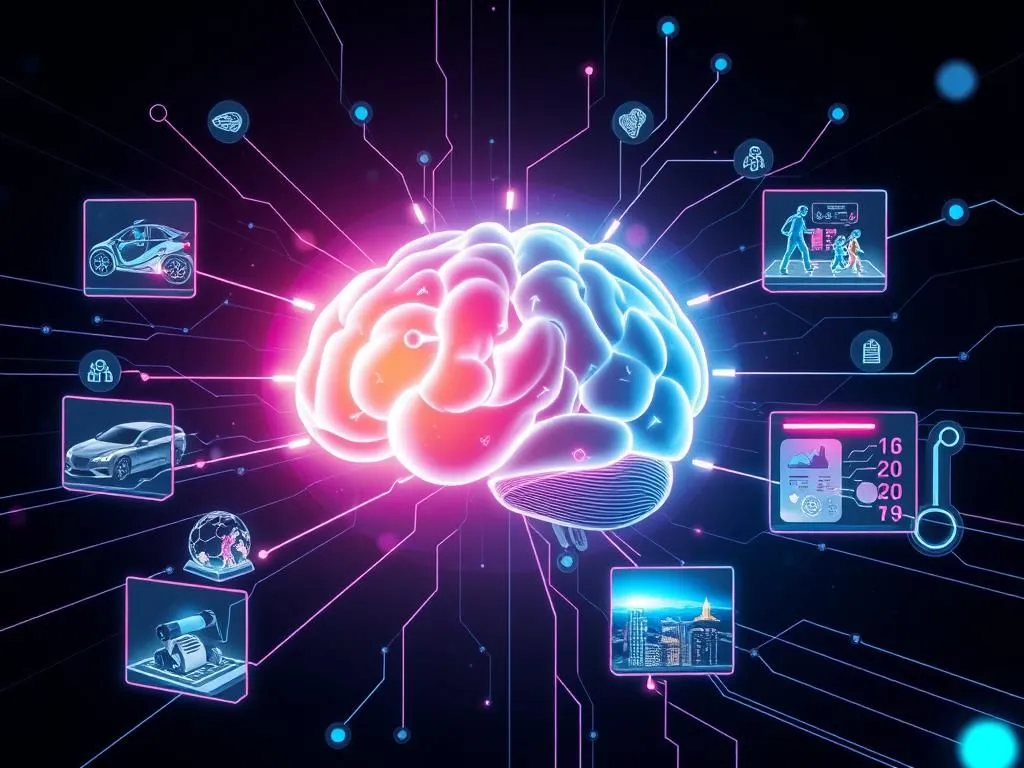
Artificial Intelligence and machine learning are pivotal technologies, extensively applied across a multitude of domains. These systems are integral to advancements ranging from autonomous transportation to enhancing user experiences in sectors like tourism. This broad applicability underscores the pervasive and transformative nature of AI in the contemporary world.
When Algorithms Fail: The Cost of Undetermined Paths
Our journey through the digital landscape shows us that while AI offers incredible opportunities, it also comes with responsibilities. Just like our initial scenario where given that no keywords have been provided, AI cannot make a determination, real-world AI and algorithmic systems can sometimes fail when inputs are unclear or incorrect. The consequences of these 'undetermined paths' can be serious.
Think about how algorithms are used in important areas like healthcare. While the research material we looked at specifically talks about 'calculating the cost of medication errors' in a medical setting5, it reminds us that errors can happen when the underlying systems – often driven by algorithms – don't get things right. Even if a system is designed to help, a small mistake in its programming, or a lack of clear 'keywords' (data) to make a good decision, can lead to big problems. These errors show that even the smartest algorithms need careful design, clear rules, and constant checking to ensure they always make the right 'determination.' It highlights why human oversight remains so vital, especially when an algorithm's decision affects real lives.
The Language of Technology: Shaping AI's Understanding
To understand how AI 'determines' anything, we need to think about the language it speaks. Not human languages, but programming languages! These are the special sets of instructions that tell computers and AI systems what to do. It's interesting to note that 'almost every programming language [is] made in English'6. This isn't just a fun fact; it shows how our human language choices deeply shape the very 'keywords' and structures that AI understands from its foundation.
The way a programming language is built – its 'syntax' – is like the grammar rules for AI. If the instructions aren't clear, or if the 'keywords' used in the code are ambiguous, the AI might not be able to make the correct determination. This connection between human language, programming language, and AI's ability to process information is a powerful example of how our world and the digital world are constantly influencing each other. It shows that the clearer we are in defining the 'keywords' and rules, the better AI can perform its tasks.
Beyond Core Functions: AI's Broader Digital Footprint
As we journey further into the evolving digital landscape, it becomes clear that AI's influence stretches far beyond just job applications and avoiding errors. It touches upon how we connect, how we learn, and even how we build businesses. Our digital lives are interwoven with tools and platforms that, while not always overtly 'AI,' still demand clear understanding and 'determination' to navigate effectively.
Take, for instance, professional networking sites like LinkedIn. Many professionals consider its premium services. A common question arises: 'Does anyone know why LinkedIn premium is so expensive? Is there...' a real value to it7. This question, much like our AI problem, requires a user to 'determine' the value based on their own 'keywords' – their career goals, how often they use the platform, and the specific features they need. While AI might power some of LinkedIn's backend features, the decision to invest in a premium service is a very human one, driven by personal assessment and the perceived 'keywords' of benefit.
Moving to the world of entrepreneurship, the digital age has opened countless doors for people to start their own businesses. But with new opportunities come new complexities. For example, it's crucial to understand 'What is the difference between being an entrepreneur and an MLM...'8. This distinction requires clear definitions and 'keywords' to avoid confusion and make informed decisions about one's career path. Just as AI needs clear inputs, individuals need clear guidance to 'determine' the best path for their entrepreneurial ambitions.
Even seemingly unrelated fields find themselves shaped by the digital tide and the need for clear definitions. Understanding 'Key Migration Terms,' for example, as defined by the IOM, UN Migration9, is vital for clear communication in a globally connected world. Similarly, the concept of 'merchandising,' described in resources like Amazon's FAQs10, involves strategically presenting products to consumers – a process increasingly informed by data analytics and, yes, AI-driven insights that 'determine' consumer preferences based on their digital 'keywords.'
In all these areas, from personal career choices to international definitions, the underlying principle remains: for effective understanding, decision-making, and progress, clear 'keywords' and a precise 'determination' are absolutely essential. Whether it's an AI system or a human trying to navigate a complex decision, the clarity of input is often the key to success.
Charting a Determined Future with AI
Our exploration today has taken us through many corners of the digital world, all connected by a single, profound idea: even in the age of advanced Artificial Intelligence, the power of clear information, of precise 'keywords,' cannot be overstated. We started with the intriguing puzzle of an AI saying, given that no keywords have been provided, I cannot make a determination, I am therefore unable to select a keyword. This simple statement, seemingly a limitation, actually reveals a fundamental truth about AI and our interaction with it.
From battling misinformation online and smartening up our job applications with Applicant Tracking Systems, to understanding the roots of technological errors and the very language that builds our digital tools, the need for clear inputs is paramount. We've seen how human discernment is vital in a world of online manipulation, how careful crafting of resumes is key to impressing AI screeners, and how precise programming prevents costly algorithmic mistakes.
As AI continues to grow and learn, its ability to 'determine' and 'select' will only improve with the quality of the 'keywords' and data we provide. This isn't just about feeding computers information; it's about thoughtful design, ethical considerations, and ongoing human guidance. The future of AI is not just about what machines can do on their own, but how brilliantly they can perform when given clear instructions and purpose by us. It's an exciting partnership, where understanding AI's strengths and its current need for well-defined 'keywords' will lead to a more intelligent, safer, and determined digital future for all.
Frequently Asked Questions
Question: What is the core challenge AI faces when "no keywords are provided"?
Answer: The AI system cannot make an accurate determination or select relevant information because it lacks the necessary clear and defined inputs to process.
Question: How do Applicant Tracking Systems (ATS) relate to the "keywords are key" concept?
Answer: ATS use keywords from job descriptions to filter resumes. Without a resume containing relevant keywords, an ATS might incorrectly screen out a qualified candidate.
Question: Why is human language important for AI's understanding?
Answer: Most programming languages are based on English, meaning the structure and 'keywords' AI understands are deeply rooted in human linguistic choices, impacting its foundational ability to process information.
Disclaimer: The information is provided for general information only. JYMS Properties makes no representations or warranties in relation to the information, including but not limited to any representation or warranty as to the fitness for any particular purpose of the information to the fullest extent permitted by law. While every effort has been made to ensure that the information provided in this article is accurate, reliable, and complete as of the time of writing, the information provided in this article should not be relied upon to make any financial, investment, real estate or legal decisions. Additionally, the information should not substitute advice from a trained professional who can take into account your personal facts and circumstances, and we accept no liability if you use the information to form decisions.

