
![[object Object] icon](/_next/static/media/home.59b745c9.svg)

![[object Object] icon](/_next/static/media/buy.57cae078.svg)
![[object Object] icon](/_next/static/media/rent.2864d22a.svg)
![[object Object] icon](/_next/static/media/commercial.5f5f9bbc.svg)
![[object Object] icon](/_next/static/media/condos.8a55189e.svg)
![[object Object] icon](/_next/static/media/newLaunches.e1f1ccfd.svg)
![[object Object] icon](/_next/static/media/agents.9f8252e2.svg)
![[object Object] icon](/_next/static/media/guides.f567fc08.svg)
![[object Object] icon](/_next/static/media/contactUs.a39ef3b7.svg)
![[object Object] icon](/_next/static/media/aboutUs.e47cbd6d.svg)


The Evolving Landscape of AI: From Data Privacy Battles to Content Creation Revolution
Key Takeaways
- AI's Dual Impact: Artificial intelligence is rapidly transforming content creation while simultaneously sparking crucial debates around data privacy and ethical usage.
- Global Problem-Solver: Beyond creativity, AI holds significant promise for addressing major global challenges like climate change, sustainable development, and improving societal well-being for diverse populations.
- Foundational Elements: The effective and ethical deployment of AI relies on strong foundations including meticulously managed data, rigorous research, and open collaboration among experts.
- Business Efficiency: AI tools are streamlining daily business operations, from logistics to resource management, driving digital transformation and enabling human workers to focus on strategic tasks.
Hello, fellow explorers of the digital frontier! Buckle up, because we're about to dive deep into the evolving landscape of AI: from data privacy battles to content creation revolution. Artificial intelligence isn't just a buzzword anymore; it's a living, breathing force shaping our world at an incredible speed. Every day, it touches new parts of our lives, changing how we work, play, and even how we think. From exciting new ways to create amazing content to big questions about keeping our personal information safe, AI is constantly making headlines and sparking conversations. It's a journey filled with both dazzling opportunities and tricky challenges that we all need to understand.
Imagine a world where powerful computer brains can write stories, paint pictures, or even help doctors discover new medicines. This is the promise of today's technological advancements in AI. But with great power comes great responsibility, as the saying goes. As these powerful AI tools become more common, we're seeing important discussions about how they should be used, who owns the information they learn from, and how we can make sure they benefit everyone fairly and safely. This week, we're exploring these exciting changes, looking at the good, the tricky, and everything in between. We'll uncover how AI is shaking things up in content creation, how it's sparking big debates about our personal data, and even how it might help us tackle some of the world's biggest problems, like climate change. Get ready to explore the amazing, and sometimes puzzling, world of modern AI1.
The New Battleground: AI and Your Personal Data
One of the biggest conversations happening right now in the world of AI innovation is all about our personal data. Think about all the information you share online every day – from your health details to your shopping habits. As AI gets smarter, it needs vast amounts of data to learn and grow. But whose data is it, and how is it being used? This is where the data privacy battles begin.
It’s becoming super important to manage our data carefully, especially when it comes to very personal stuff like our health information. A deep look at how personal health data has been protected (and sometimes not protected) shows us that we need much stronger systems. There have been many cases where personal health data was not kept safe, and a careful study of these failures is really needed to make sure our private information stays private2. This is a big deal because if this kind of sensitive data isn't handled with extreme care, it can lead to serious problems for individuals. We need to be able to trust that our most private details are truly secure, especially as more of our lives become digital and connected to AI systems.
This concern isn't just about health records; it stretches across all kinds of personal information, especially when huge tech companies get involved. A great example of this is the recent stir around Meta – the company behind Facebook and Instagram. People have been talking a lot about how Meta might be using their information to train its own AI models. This has led many users to look into how they can object to Meta using their data for this purpose3. It's a clear sign that people are becoming more aware and concerned about their digital rights. They want to know exactly what happens to their posts, photos, and interactions when a company plans to feed it into a machine learning system designed to get smarter. This ongoing discussion highlights a crucial part of AI ethics: who controls the data that shapes AI, and how much say do individuals have in that process? Protecting personal information isn't just a technical challenge; it's a challenge for fairness and trust in our digital world. As AI adoption increases, understanding the basics becomes even more critical, as highlighted in this blog post about demystifying AI: a comprehensive guide for beginners4.
AI's Creative Surge: Revolutionizing Content Generation
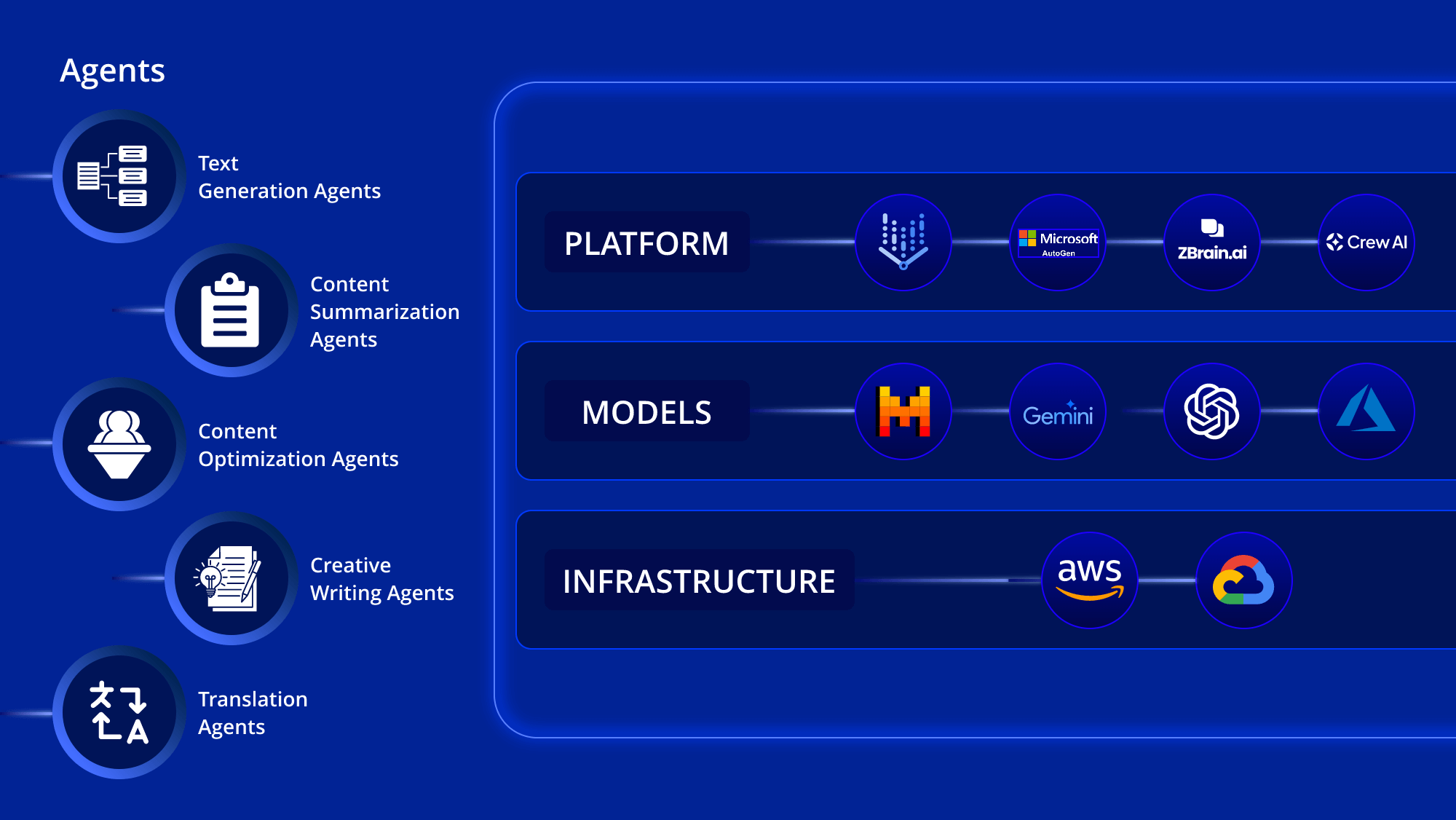
While debates over data privacy heat up, another side of AI is bursting with creative energy: generative AI and its revolution in content creation. Imagine a helper that can write articles, design images, or even compose music based on just a few ideas from you. That's what AI agents for content generation are doing right now! These clever programs are changing the game for writers, artists, marketers, and many others. They're like super-fast assistants that can create all sorts of content, from short social media posts to longer reports and detailed visuals.
These AI tools are pretty amazing. They have special "capabilities" that let them understand what you want and then come up with new, original content. The "key components" of these AI agents include very smart computer programs that have learned from huge amounts of existing text, images, or sounds. This learning allows them to spot patterns and then make brand-new things that often look and sound just like human-made content5. This means you can give an AI a topic, and it might write a blog post, or tell it to create an image, and it will draw something truly unique.
However, this exciting new power also brings new and unexpected challenges. For users, it means thinking about how to use these tools responsibly, how to check the facts in AI-generated content, and how to keep a human touch in their work. For policymakers, it means figuring out new rules and guidelines. How do we tell the difference between human and AI content? What about copyright? And how do we prevent these tools from being used to spread false information or create harmful content? One aspect of responsible use includes understanding AI literacy, further information on that can be found here6.
This is why having clear rules is so important. Just like how companies need to follow strict guidelines for advertising, such as the Google Ads policies, to make sure ads are fair and honest7, we need similar rules for AI implementation in content creation. These policies help make sure that when AI is used, it’s done in a way that is responsible and benefits everyone. As AI continues its digital transformation of the creative world, finding this balance between innovation and responsibility will be key to its successful and ethical future.
Beyond the Hype: AI's Role in Global Challenges and Societal Well-being
The power of AI reaches far beyond just creating content or managing data. It holds incredible promise for helping us tackle some of the world's biggest and most complex problems, contributing to our overall societal well-being. From protecting our planet to improving the lives of different groups of people, AI innovation offers new ways to understand and address challenges that have puzzled us for generations.
Sustainability and Our Changing Climate:
One of the most pressing issues facing our world is climate change and the push towards achieving sustainable development goals. These goals are big plans for a better future for everyone, but they require many different solutions working together8. AI can play a crucial role here, helping us understand and predict the environmental impacts of climate change. For example, machine learning algorithms can analyze huge amounts of weather data, satellite images, and sensor readings to better track changes in our environment. This can help scientists spot trends, predict extreme weather events, and even find new ways to reduce pollution or manage natural resources more wisely.
There are many known and unknown environmental impacts from climate change, and AI can help us shine a light on these complex connections.

Climate change leads to a complex array of environmental impacts, some of which are well-understood while others remain less clear. Addressing these effects necessitates comprehensive strategies for mitigation and adaptation to protect ecosystems and human well-being.
By helping us see the bigger picture and make sense of massive datasets, AI can be a powerful ally in our fight to create a more sustainable AI-powered future and a healthier planet. This often involves intricate systems that collect data from various sources, making the job of understanding environmental changes much clearer for researchers and policymakers. The more data AI can process, the more accurate its predictions and recommendations can be, helping us prepare for and adapt to a changing world9.
Improving Lives: Mobility for Older Adults:
AI also offers exciting opportunities to improve the daily lives of specific groups, such as older adults. As people get older, things like getting around can become harder, which really affects their well-being. Thinking about challenges and opportunities in mobility among older adults is very important10. AI could help create smart environments, like homes with sensors that detect falls or smart vehicles that help with navigation. AI-powered apps could suggest safe walking routes, connect older adults with transport services, or even provide personalized exercise routines to help maintain their physical independence. These technological advancements are not just about convenience; they're about giving older adults more freedom and a better quality of life, allowing them to stay connected and active in their communities.
Understanding Population Movements:
Another area where AI's ability to process and analyze large datasets can be transformative is in understanding the movement of people around the world. Knowing the clear definitions of migration terms and the overall dynamics of migration is important for humanitarian aid, urban planning, and policy making11. While the source here provides key definitions, imagine AI helping to analyze huge amounts of data – from social media trends to weather patterns and economic indicators – to predict migration flows. This could help aid organizations better prepare for crises, and governments better plan for integrating new populations. By offering deeper insights into why and how populations move, AI tools can help us create more humane and effective responses to complex global challenges. This application of AI can lead to better resource allocation and more informed policy decisions, making a real difference in people's lives. The applications of AI in predicting population movements are a prime example of how machine learning contributes to predictive analytics, a topic discussed in detail in the blog post about machine learning12.
The Foundation of Knowledge: Data, Research, and Collaboration in the AI Era
For AI to truly reach its potential and navigate its challenges, it relies heavily on strong foundations: well-managed data, rigorous research, and open collaboration. Just like a building needs a solid base, the world of AI needs good information and smart ways to study it.
Making Sense of Data for AI:
At the heart of any effective AI system is data – lots of it! But data isn't always neat and tidy. To improve our understanding across many different fields, researchers often need to combine and clean vast amounts of information before they can analyze it. For example, learning how to combine and clean bibliometric data for bibliometric analysis is a crucial skill. This means gathering information from many different academic papers and publications, removing duplicates, correcting errors, and organizing it so that we can spot important trends and connections13. This careful work is absolutely essential for training machine learning models, making sure that the data they learn from is accurate and reliable. Without clean, well-organized data, even the smartest AI tools can make mistakes or give us misleading information. This emphasis on data quality underpins all successful AI innovation.
Smart Ways to Study AI's Impact:
As AI changes our world, it's vital that we also find smart ways to study its effects. This involves using good research methods. A review of Secondary Qualitative Research Methodology Using Online Data, for instance, helps researchers understand how to use information already available online to analyze complex social issues14. This type of research is incredibly useful for understanding how people are reacting to AI, what challenges they face, and what benefits they are experiencing. By carefully looking at online discussions, articles, and public opinions, researchers can gather valuable insights that can help guide the development of AI ethics and policies. These methodologies allow us to study the human side of digital transformation, ensuring that AI development is informed by real-world experiences.
Sharing Knowledge and Best Practices:
Finally, for everyone to benefit from AI, scientists, engineers, and thinkers need to share their work clearly and effectively. This is where guidelines for writing and publishing come in. Resources like the "Angewandte Chemie International Edition - Notice to Authors" provide clear rules for scientists on how to write their papers, what kinds of pictures to use, and how to make sure their work is understood by others15. These guidelines are super important because they help make sure that new discoveries about AI, whether it’s a new algorithm or an ethical concern, are communicated clearly, accurately, and can be easily understood and built upon by other researchers around the world. This open sharing helps speed up technological advancements and ensures that the best ideas can be put into practice more quickly.
AI for Business Operations: Streamlining the Everyday
Beyond the big, complex challenges, AI is also quietly working to make our everyday lives and business operations smoother and more efficient. Think about all the background tasks that keep businesses running – from managing inventory to sending packages. AI can step in to make these processes much faster and smarter, marking a true digital transformation for many industries.
For instance, consider the world of logistics and shipping. Businesses constantly need to track packages, manage deliveries, and optimize routes. This is where tools like the FedEx Ship API Documentation come into play. An API (Application Programming Interface) is like a special messenger that allows different computer programs to talk to each other. By using such documentation, businesses can integrate FedEx's shipping services directly into their own systems, automating tasks like creating shipping labels, tracking packages, and getting real-time updates16. While this specific example focuses on an API, the principles of automation and integration it represents are prime candidates for AI innovation. Imagine AI tools learning from past shipping data to predict the best routes, automatically adjusting for weather delays, or even managing unexpected changes in demand. This kind of machine learning application can significantly improve business related processes, making them more reliable, cost-effective, and efficient. It's a clear demonstration of how AI can streamline operations and free up human workers to focus on more creative and strategic tasks, further driving technological advancements in commerce. To understand how AI is currently being integrated into business workflows, see practical ai workflow examples17.
Conclusion: Navigating the Future of AI with Curiosity and Care
As we look across the evolving landscape of AI: from data privacy battles to content creation revolution, it's clear we're living in a time of incredible change. Artificial intelligence is not a static concept; it's a dynamic force that continues to grow and adapt, bringing with it both tremendous opportunities and significant responsibilities. We've seen how AI tools are transforming how content is made, offering new ways to be creative and productive. At the same time, these technological advancements are pushing us to think deeply about data privacy and the ethical implications of handing over our personal information to powerful algorithms, exemplified by the discussions around Meta's data usage.
Beyond these immediate impacts, AI innovation is also emerging as a vital partner in tackling some of our most pressing global challenges. From helping us understand and adapt to climate change to improving mobility for older adults and shedding light on complex migration patterns, AI offers new lenses through which to view and solve problems. Yet, for all this promise to be realized, it requires a strong foundation of well-managed data, careful research, and clear communication among experts.
The journey ahead with AI will undoubtedly be filled with more twists and turns. It will require ongoing conversations about AI ethics, constant vigilance in protecting our digital rights, and a continuous commitment to responsible AI implementation. As this digital transformation continues, it's up to all of us – users, developers, policymakers, and researchers – to approach the future of AI with a mix of curiosity, excitement, and careful consideration. By working together, we can ensure that AI becomes a force for good, shaping a future that is not only smarter but also more fair, sustainable, and beneficial for everyone. The revolution is here, and we are all part of it. For additional resources and thought leadership on this topic, explore comprehensive guide to the future of AI.
Frequently Asked Questions
Question: What are the main ethical concerns in AI?
Answer: Main ethical concerns in AI include data privacy, accountability for AI decisions, bias in algorithms, job displacement, and the potential for misuse of powerful AI tools.
Question: How is generative AI revolutionizing content creation?
Answer: Generative AI is revolutionizing content creation by enabling the rapid production of original text, images, and other media based on user inputs, significantly boosting productivity for creative professionals.
Question: What role can AI play in addressing climate change?
Answer: AI can help address climate change by analyzing vast datasets to predict environmental impacts, optimize resource management, track pollution, and model effective strategies for sustainable development.
Disclaimer: The information is provided for general information only. JYMS Properties makes no representations or warranties in relation to the information, including but not limited to any representation or warranty as to the fitness for any particular purpose of the information to the fullest extent permitted by law. While every effort has been made to ensure that the information provided in this article is accurate, reliable, and complete as of the time of writing, the information provided in this article should not be relied upon to make any financial, investment, real estate or legal decisions. Additionally, the information should not substitute advice from a trained professional who can take into account your personal facts and circumstances, and we accept no liability if you use the information to form decisions.